Into the Void Home

Category

Science & Philosophy

15 articles

Remembering Someone Who Never Was: The Brain's Quiet Conspiracy Against Your Past

Remembering Someone Who Never Was: The Brain's Quiet Conspiracy Against Your Past

Memory does not archive the past — it authors it. Each time we reach backward into what we believe we once were, we are not retrieving a record but composing a fiction, one shaped more by present longing than by historical fact. This is the neurological engine behind nostalgia, and it is running at full speed.
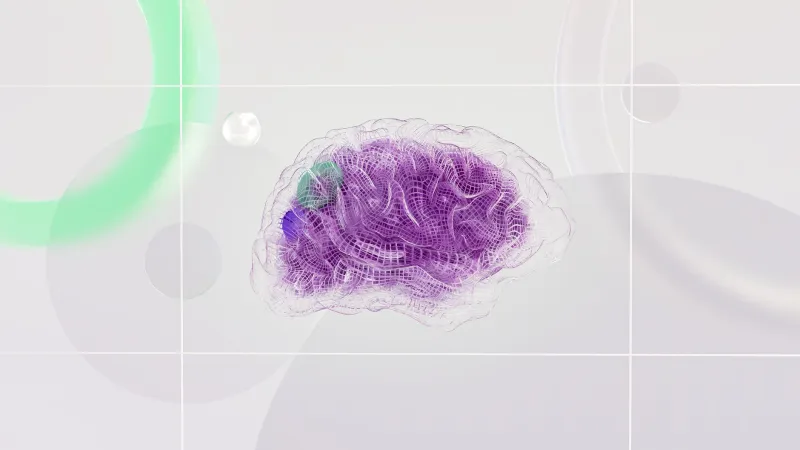
Walls Within Walls: The Mind's Compulsion to Contain Itself

Walls Within Walls: The Mind's Compulsion to Contain Itself

Human consciousness does not merely seek shelter—it engineers it, layer upon layer, until the architecture of protection becomes indistinguishable from the architecture of confinement. This piece examines why the mind builds nested systems of meaning and control, and asks whether liberation begins not with demolition, but with recognition.

The Glitch Is the Gift: What Your Brain's Blank Moments Are Actually Doing

The Glitch Is the Gift: What Your Brain's Blank Moments Are Actually Doing

We have been taught to fear the blank stare, the mid-sentence pause, the moment when the mind simply refuses to perform. But neuroscience is beginning to suggest that these apparent failures of cognition are not malfunctions at all — they are the brain doing something essential, strange, and quietly profound.

The Fertile Void: Why Your Brain Needs Emptiness to Think

The Fertile Void: Why Your Brain Needs Emptiness to Think

Modern culture treats idle minds as wasted ones, but neuroscience tells a different story. The brain's default mode network — most active when you are doing nothing at all — may be the true engine of creativity, self-understanding, and breakthrough thought. What happens to consciousness when we refuse to let it rest?

What the Quiet Knows: The Neuroscience of Consciousness at the Edge of Nothing

What the Quiet Knows: The Neuroscience of Consciousness at the Edge of Nothing

When meditators describe dissolving into something vast and borderless, neuroscience is beginning to take them seriously. What happens inside the brain during profound silence may be less about switching off and more about switching into something we are only beginning to understand. The void, it turns out, is not empty.

The Burden of Knowing: How Infinite Information Left Us More Lost Than Ever

The Burden of Knowing: How Infinite Information Left Us More Lost Than Ever

We live in an era of unprecedented access to cosmic knowledge, yet existential anxiety has never been more pervasive. The more the universe reveals itself to us, the less certain we seem to feel about our place within it. This is not a failure of information — it is a paradox baked into the very nature of knowing.

Burning Bright, Burning Out: The Hidden Neurological Price of Living in a Perpetual State of Stimulation

Burning Bright, Burning Out: The Hidden Neurological Price of Living in a Perpetual State of Stimulation

Modern existence has quietly transformed the human brain into something it was never designed to be: an always-on processing engine running multiple identities, infinite inputs, and relentless decisions simultaneously. Neuroscience is beginning to map the metabolic wreckage this leaves behind. The question is no longer whether our minds are overloaded—it is whether the damage is already compounding faster than we can perceive it.

Crowded Into Emptiness: The Neuroscience of Loneliness in the Age of Infinite Contact

Crowded Into Emptiness: The Neuroscience of Loneliness in the Age of Infinite Contact

We have engineered a world of perpetual contact, yet loneliness has reached epidemic proportions in the United States. Beneath the surface of every notification and curated post lies a neurological gulf that digital connection may be fundamentally incapable of bridging. This investigation asks whether the architecture of modern connectivity is, by its very design, a machine for manufacturing isolation.

Grieving a Life You Never Lived: The Phantom Past and the Crisis of Curated Memory

Grieving a Life You Never Lived: The Phantom Past and the Crisis of Curated Memory

Advances in photo curation algorithms, social media timelines, and our own reconstructive memory processes are conspiring to produce a past that never quite existed — and a grief that is nonetheless entirely real. The idealized self we mourn was never alive, yet its absence shapes our present identity with surprising force. Understanding this phenomenon may be the first step toward reclaiming an authentic relationship with who we actually are.

The Edited Self: How Your Brain Rewrites Your Past and What That Means for Who You Are

The Edited Self: How Your Brain Rewrites Your Past and What That Means for Who You Are

Every time you recall a memory, your brain does not retrieve a fixed recording—it reconstructs the event from fragments, quietly altering it in the process. Neuroscience now confirms what philosophers have long suspected: the self we believe ourselves to be is, in significant part, a retrospective fiction, assembled fresh each time we reach for it.

The Threshold: What Dying Brains and Deathless Minds Tell Us About the Self

The Threshold: What Dying Brains and Deathless Minds Tell Us About the Self

Tens of millions of Americans report having experienced something at the edge of death that defied the boundaries of ordinary consciousness — luminous tunnels, encounters with the departed, a vast and wordless sense of homecoming. Whether these experiences are windows into a transcendent reality or the final, spectacular fireworks of a shutting-down brain remains one of the most fiercely contested questions in contemporary neuroscience and philosophy. What is certain is that they force us to ask

God in the Machine: Why Simulation Theory Has Become the Mythology of the Digital Age

God in the Machine: Why Simulation Theory Has Become the Mythology of the Digital Age

Simulation theory lacks the empirical scaffolding of science, yet it has captured the imagination of millions with the tenacity of a genuine belief system. This piece argues that the theory's cultural staying power has little to do with its verifiability and everything to do with its function as a secular mythology—one uniquely suited to a civilization that has begun to understand itself in computational terms. What does it mean when a society's most popular metaphysical framework is borrowed fr

Reality as Code: What Quantum Physics Tells Us About the Universe We Think We Know

Reality as Code: What Quantum Physics Tells Us About the Universe We Think We Know

When physicists observe a particle, they do not merely detect it — they appear to summon it into a definite state. This unsettling feature of quantum mechanics has reignited one of the oldest philosophical questions in human history: is the universe something that exists independently of us, or is it, in some profound sense, constructed? The simulation hypothesis, once confined to late-night dormitory debates, is now drawing serious attention from theoretical physicists and consciousness researc